A very hot day today and a disappointing number of birds coming for a drink… Mind you, the Sulphur Crested Cockatoos are always present…
Learn more about the Sulphur Crested Cockatoo…
Categories
A very hot day today and a disappointing number of birds coming for a drink… Mind you, the Sulphur Crested Cockatoos are always present…
Learn more about the Sulphur Crested Cockatoo…
Not much to chose from among our bird visitors today, so here is another Bronzewing cooling its heels…
Learn more about the Common Bronzewing
Sigh… today’s results were so-so… We’ve had a bit of wet weather lately, so traffic to the water bowl was modest, also I’ve been fiddling with the camera angle, which resulted in shots with difficult shade and sunlight. Please bear with me while I get our stuff together…
Learn more about the Satin Bowerbird
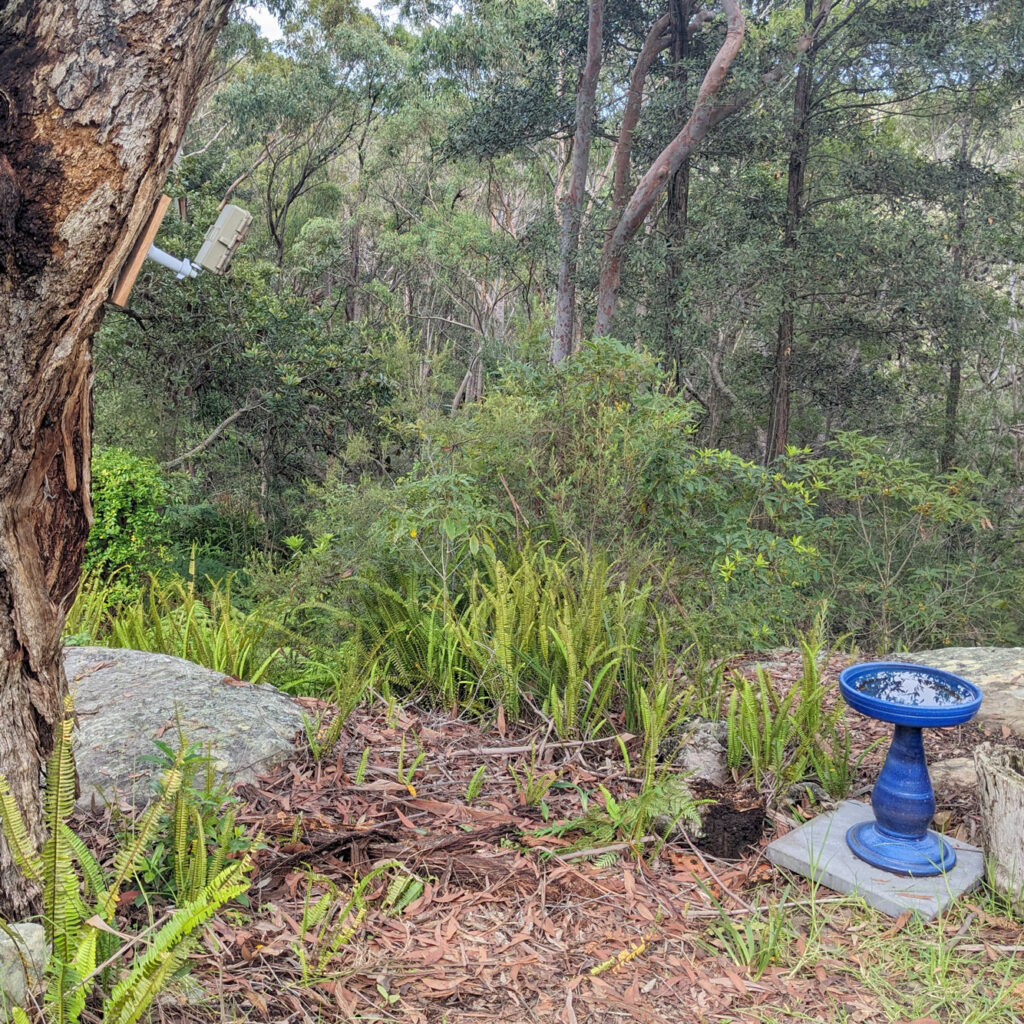
With all the rain we’ve had over the past week, the bird bath hasn’t had many customers. Today I took the opportunity to re-position the camera into a, perhaps, permanent position.
Bronzewing pigeons are regular visitors to our watering hole. They need regular refreshment when the heat is on. But you would think they’d be more accommodating when a friend comes to visit…
More Bronzewing entries:
* Drinks Hierarchy
* Taking Turns
* Art
Other birds
* Blaxland Birds list
Elsewhere about these birds:
* Wikipedia
* eBird
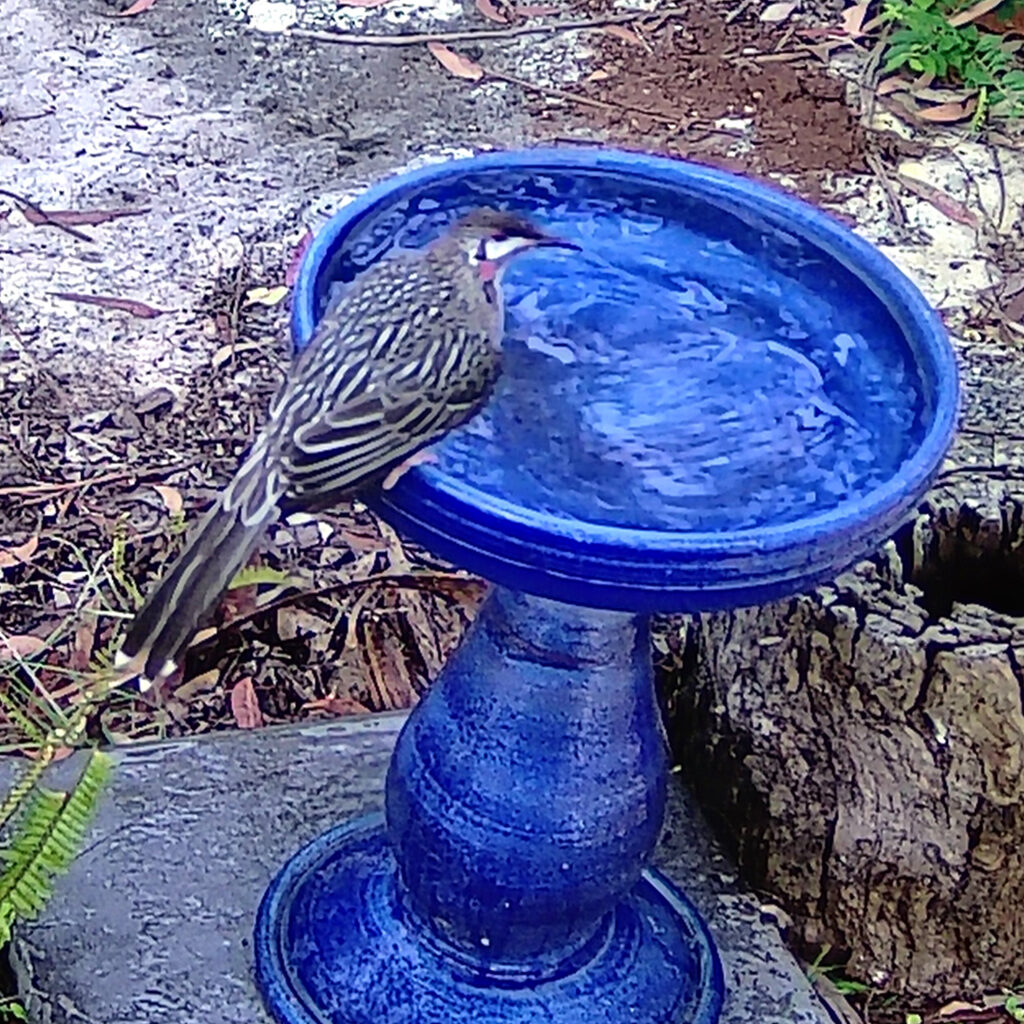
Here is another long term “friend of the family”, the Red Wattlebird, often seen when there are flowering gums or Banksia nearby.
The Blaxland Birds Listing
Elsewhere about this bird:
* Wikipedia Entry
* Red Wattlebird Call
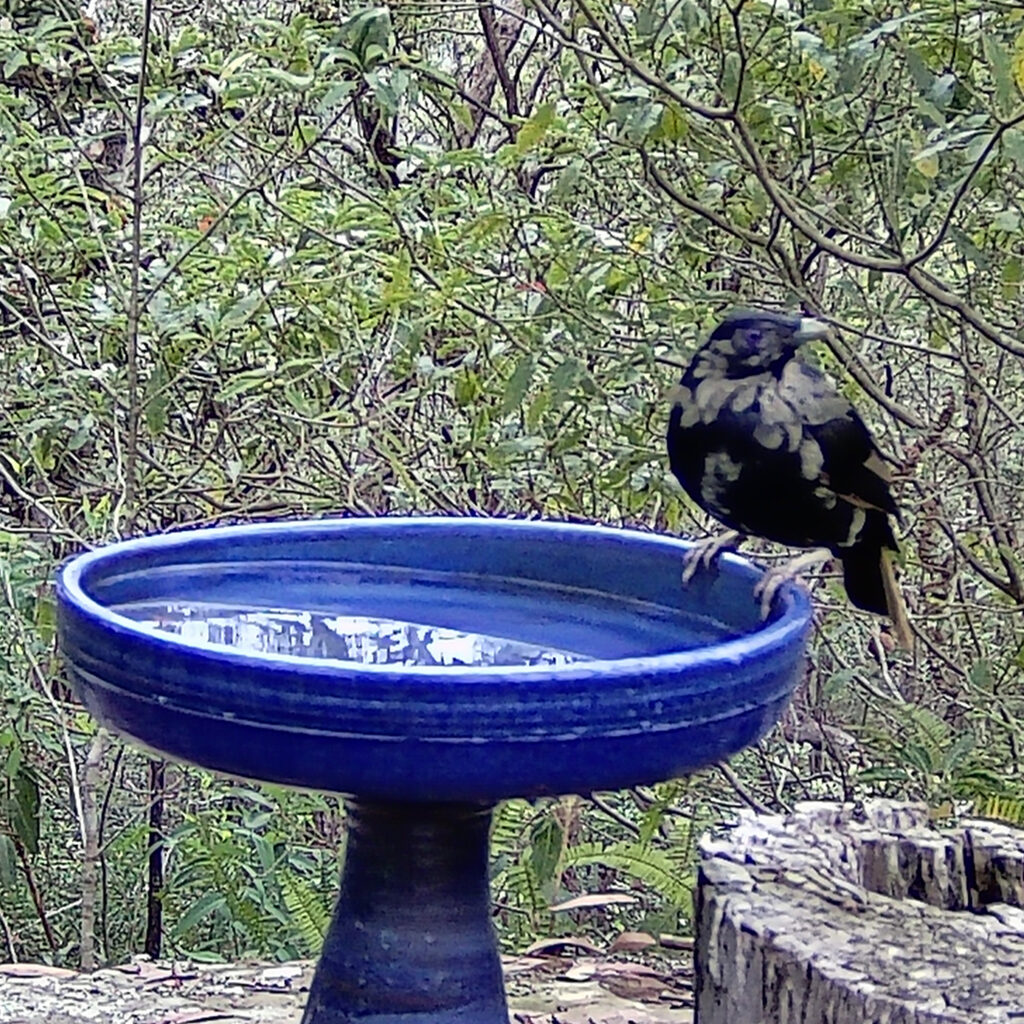
It’s been terrific to get feedback and comments via the BB Facebook group. To continue on yesterday’s topic, would this be a moulting male Satin Bowerbird on its way to turn into a glossy black bird? That would then also identify it on this earlier post.
Update: Come to think of it, there was an adult male bird back last month when I was just starting…
The Blaxland Birds list
Elsewhere about the Satin Bowerbird:
* Birdlife entry
* Wikipedia
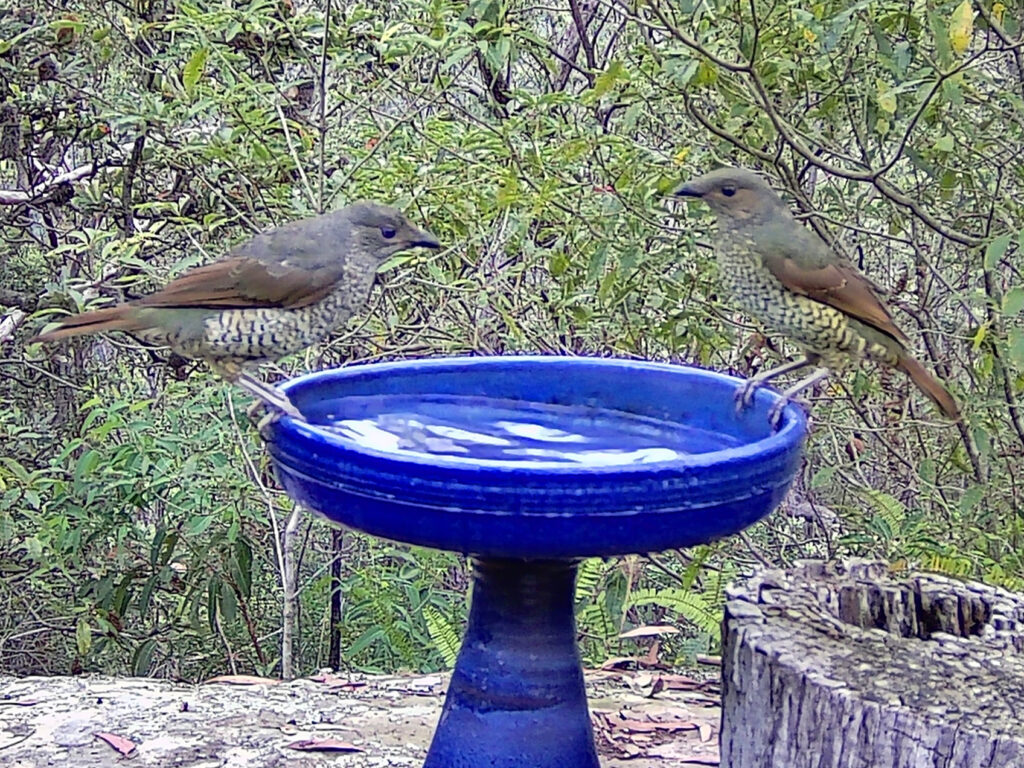
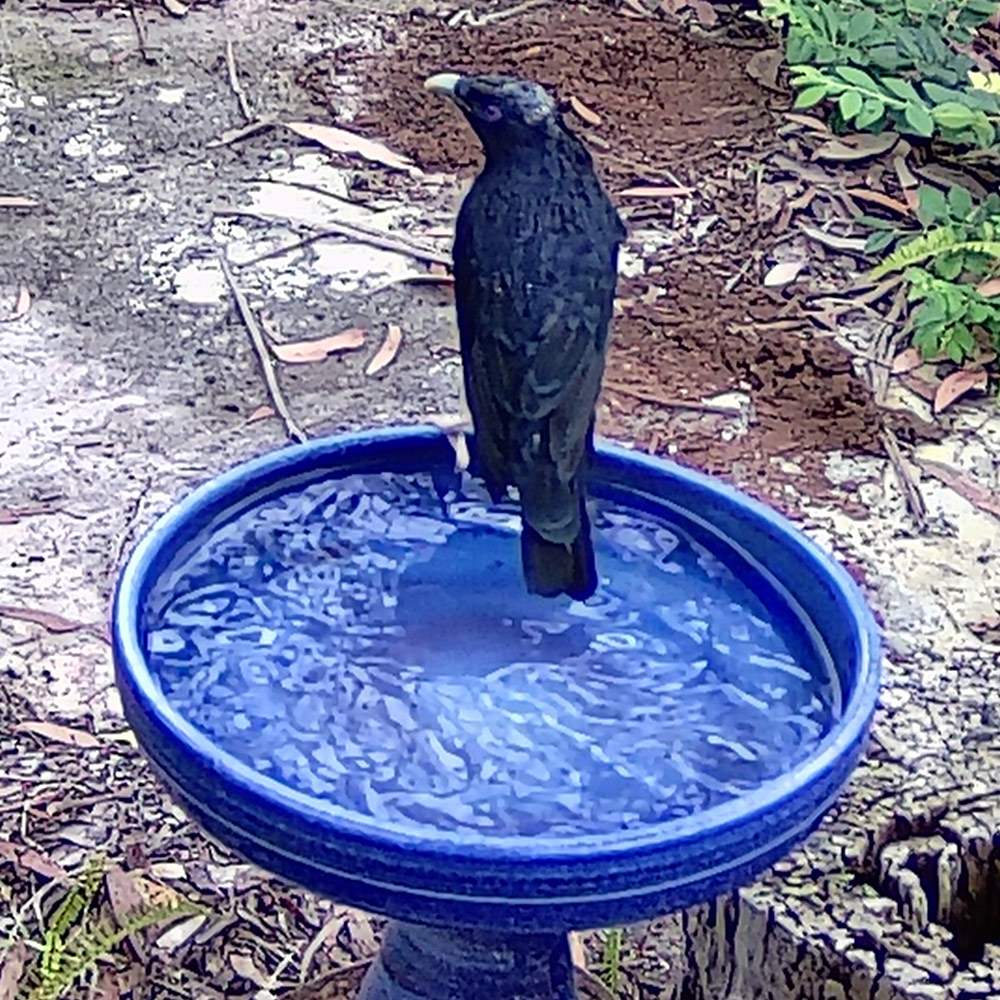
Thanks to an old friend, Karl Ankers, we’ve decided the bird from an earlier post (and pictured above) is the Satin Bowerbird. They’ve been regulars at the water bowl. The male apparently develops a satiny black sheen after seven years, so I assume one of the these is a young male…
Learn more about the Satin Bowerbird
The Blaxland Birds list
Elsewhere about the Satin Bowerbird:
* Birdlife entry
* Wikipedia
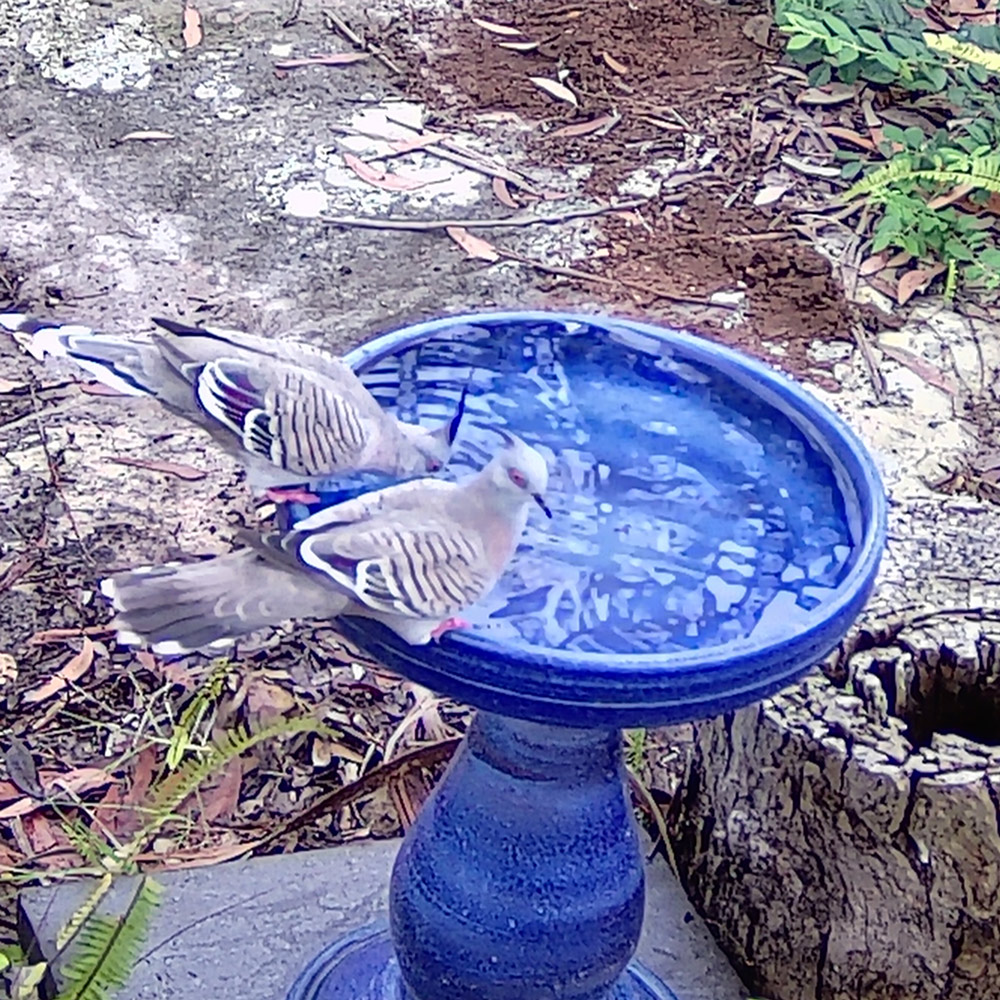
We might not think of pigeons as native Australian birds, there are several, such as the Crested Pigeon which the camera captured here a few days ago.
The Blaxland Birds list
More info elsewhere:
* Wikipedia entry
Some might think: “Not the best looking bird around”, the Noisy Friarbird is a regular around here, particularly when there are flowers in the bushes and trees.
The Blaxland Birds list
More info elsewhere:
* Wikipedia entry
* on ebird
* Its call (Youtube)